Strategic Denial: How Hormuz Is Becoming a Weaponised Chokepoint
Key Takeaways
Hormuz is now a controlled and selective access zone tool used for economic coercion.
Iran’s selective access strategy applies pressure while avoiding conflict, impacting shipping and energy markets.
The maritime chokepoint strategy is grey-zone activity that avoids conflict escalation.
The Strait of Hormuz is no longer a disruption point; it is a tool of coercive economic leverage. The Islamic Revolutionary Guard Corps has established a safe corridor after direct talks reportedly between Tehran and several governments, which has allowed a small number of ships to transit the passage. The safe corridor will have wider implications for global energy markets through instability and selective supply. The move signals to the U.S. that the Iranian regime has the ability to allow selective access or denial to the Strait and apply it against adversaries. Iran can now control supply, impacting price volatility, while also using the corridor for political leverage. It also provides economic relief to Iran with payments for passage reported.
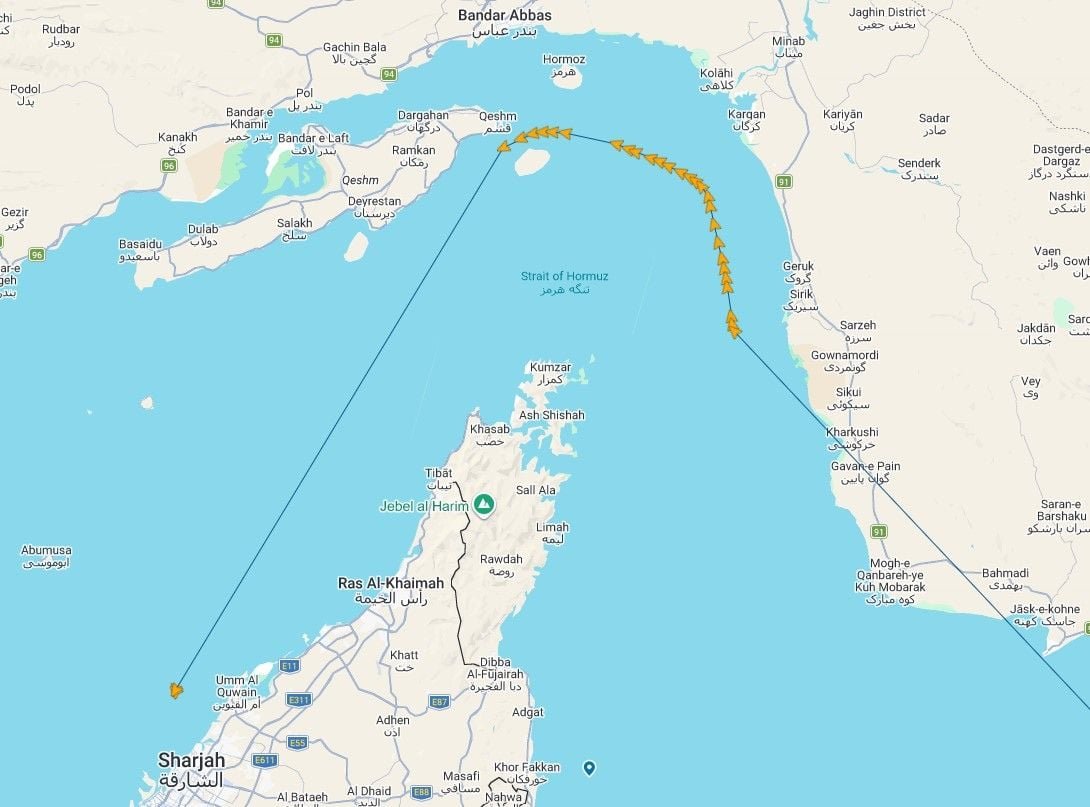
Source: Lloyd’s List (2026)
The control is exercised through ambiguity, selective access, and market forces.
For the first time since the conflict, a Greek-owned bulk carrier transited the Strait, indicating Iran is shifting toward limited, controlled access. Prior to this, there were reports of Hormuz transits by several Chinese-linked ships; however, Chinese state-owned vessels are avoiding the Strait. The strategic shift signals that Iran is coordinating with certain actors and that it can also shape disruption in the Strait. The Greek bulk carrier reportedly followed a route between Larak and Qeshm Island, bringing it close to missile bases and a surveillance checkpoint. The bulk carrier route poses problems for tankers due to the depth of less than 25 meters, making it potentially unsafe for oil tankers.
However, there is no clear indication the regime is providing an alternative route for controlled oil tankers. Leveraging oil is Tehran’s greatest economic tool for applying global pressure.
Iran’s strategy has shifted from a disruption technique to controlled access. The selective access strategy enables engagement with certain governments and isolates others. The regime can manage risk through the corridor checkpoints and with ships turning on Automatic Identification Systems. The limited access avoids escalation as passing vessels create a buffer zone that constrains the U.S. ability to carry out strikes. By maintaining passage, it frames Iran as trying to reduce the global impact of the conflict and the U.S. as the barrier. Despite the limited access, the uncertainty in the Strait is unlikely to reassure insurers or relieve pressure on global markets. Shipping companies will need to balance risk, insurance, and political implications before entering an evolving conflict zone. Nevertheless, the corridor may appeal to certain governments or the shadow fleet. The chokepoint has become a tool of statecraft, where Iran can manipulate access to apply pressure on the U.S. and global markets. What is yet to be seen is a U.S. reaction to the corridor and the ability to open the Strait.
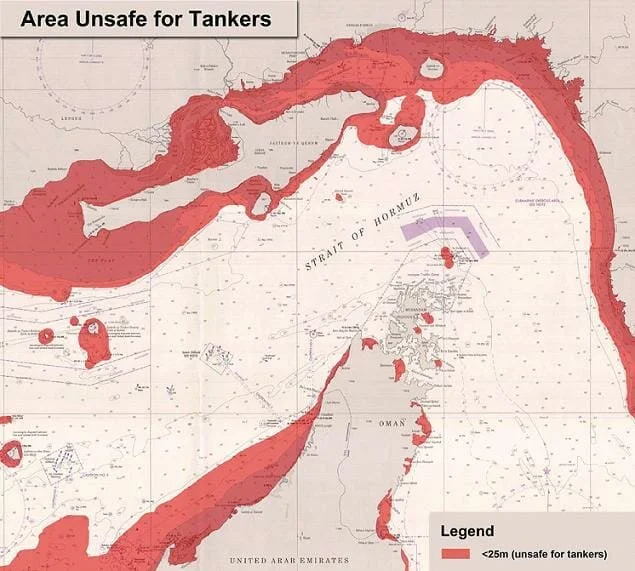
Source: Strauss Center for International Security and Law
The strategy has wider implications than the Strait itself.
The selective access approach has global implications through the control of energy flows. Total disruption allows for countermeasures and planning to mitigate loss or risk. The limited access strategy may create more uncertainty as markets try to adapt, meaning it is more volatile than closing the Strait. Even if limited access is granted, insurance is not guaranteed, or the premiums could be adjusted to the risk, resulting in increased global prices. Maritime risk associated with limited access poses complex challenges for shipping companies. Asia remains the most affected as 60% of Gulf oil goes to the region, making it more dependent. As some Chinese-linked ships have transited the Strait recently, it may suggest some companies are willing to take the risk. The limited access strategy is challenging to respond to, as it is unclear who Iran is engaging with, and how the U.S. could apply political pressure to counter Iran. The strategy demonstrates how chokepoints can become a conflict response mechanism. Chokepoints can be used to deny or allow access with minimal resources, but the global impacts are profound.
The ability to control chokepoints has broader global implications. Maritime chokepoints are not passive passages of water where trade transits freely; they are tools of geographic coercion.
The geography in the Strait of Hormuz is not unique; other straits such as Malacca or Bab el-Mandeb are similar. The Iranian regime has demonstrated how the threat of disruption can have immediate global repercussions, and it is challenging to resolve even for great powers. For China, the Strait of Malacca offers a trade and energy lifeline which is a security concern. Grey-zone activity allows chokepoint pressure to be applied while staying below the threshold of war, even through tactics such as a naval blockade or a ship sinking. As military intervention poses significant risk and escalation, economic coercion offers an alternative. Chokepoint interventions can cause rapid global economic repercussions, which can also be used as political leverage. Chokepoints may become more militarised, especially where there are increasing maritime territorial disputes such as the South China Sea. Neighbouring countries may now view these narrow passages as an asymmetrical tool against a powerful global actor.