Naval Pivot: Is the U.S. Preparing to Secure Hormuz?
Key takeaways
The U.S. maritime strategy may be shifting from offshore strikes to amphibious operations to control critical terrain.
Kharg Island and the Strait islands provide a strategic opportunity to apply economic pressure and maritime control.
The risk is perception: a limited amphibious operation by the U.S. may be viewed as an escalation by Iran.
The strategy concentrates on controlling key terrain rather than striking targets to shape access.
The unexpected fire aboard the USS Gerald R. Ford may have forced the U.S. into a tactical change in operational posture toward Iran. The carrier is currently docked in Greece undergoing maintenance. Rather than replacing the ship, the naval configuration involving amphibious vessels suggests a shift in strategy. With the USS Ford withdrawn two weeks ago, the interval may have enabled the IRGC to employ tactics to disrupt the Strait of Hormuz. The loss of the carrier resulted in diminished maritime strike capacity, particularly from the F/A-18E/F Super Hornets. The arrival of two amphibious assault ships carrying roughly 5,000 Marines reflects a strategic shift in posture away from immediate escort deployments to amphibious operations. This indicates a shift from strike-based deterrence to the control of key terrain.
The scheduled arrival of two amphibious attack ships indicates planned specialised operations. Marine Expeditionary Units are capable of conducting rapid operations, including amphibious raids and seizing key points, which makes them suitable for these conditions. Such an operation would incorporate air support with Ospreys, attack helicopters, and possibly F-35B cover if Marines are to conduct an amphibious hybrid assault. The combination provides surface and vertical assaults that could be used in coastal raids, port seizures, or capturing small islands.
Approximately 90% of Iranian oil is exported from Kharg Island, making it a strategic economic target. Seizing the island could apply economic pressure on the regime and potentially relieve pressure on global markets. Military strikes have already targeted mine storage facilities, a naval base, and air defences which reduce the threat to U.S. amphibious forces. The high-value target would inflict billions of dollars on the regime, which would be economically crippling.
A successful operation would also give the U.S. economic leverage in negotiations. Given the size of the force, it is likely a limited operation as opposed to an invasion, which risks escalation and international condemnation. Precision control of such infrastructure rather than destroying it also demonstrates a more measured military approach while inflicting pressure on the regime.
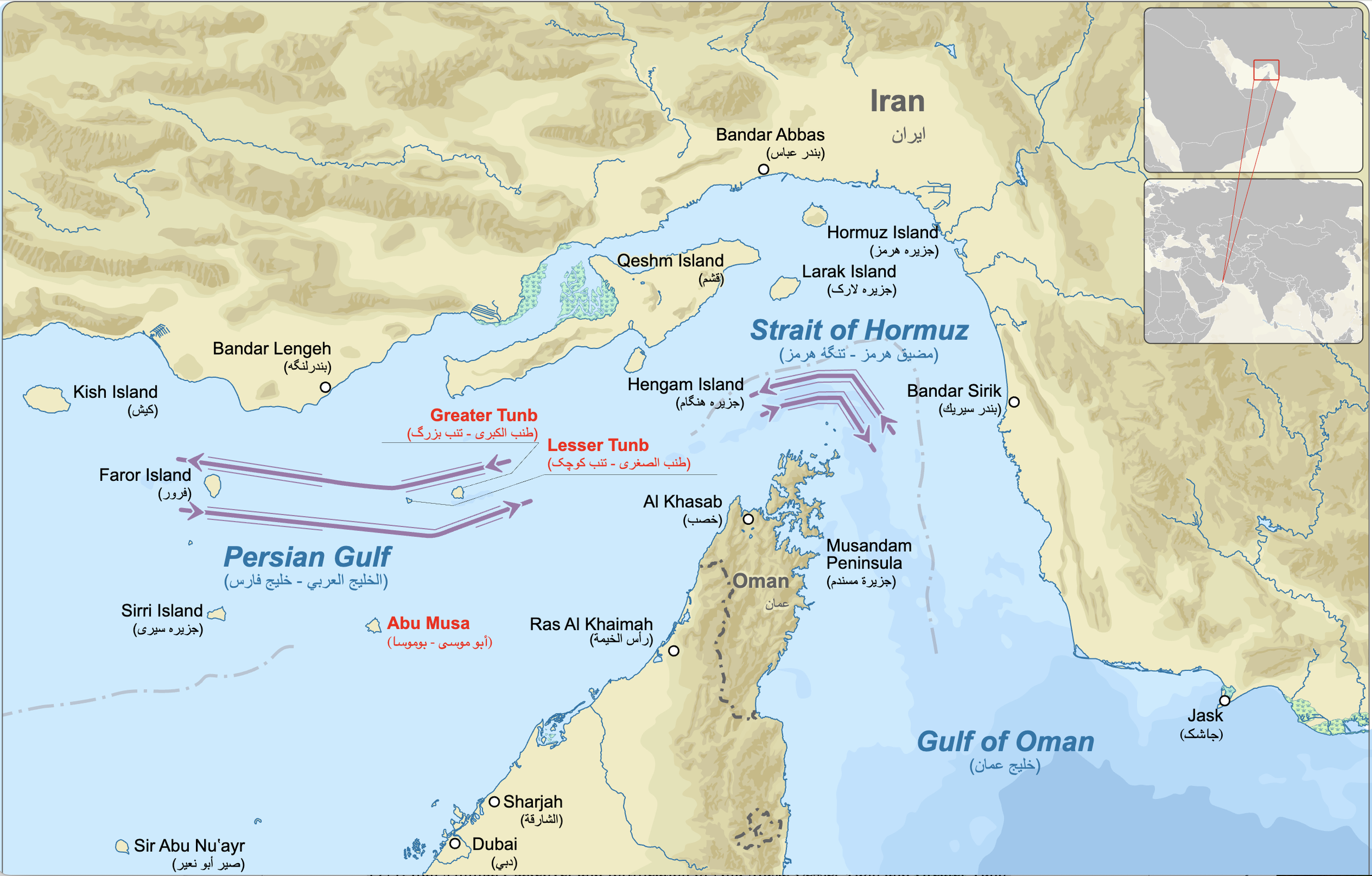
Amphibious operations may not only target economic infrastructure but also be deployed to shape control of the Strait.
Amphibious forces also have the capacity to assist with controlling the Strait of Hormuz. In 1971, Iran’s military takeover and fortification of Abu Musa, Lesser Tunb, and Greater Tunb from the UAE gave Iran three island control points over the Strait of Hormuz. The international shipping corridor is effectively wedged between the islands, enabling Iran to have not just a presence, but surveillance, access control, and military capacity. Similar to Kharg, strikes on the islands have reportedly targeted military and communication infrastructure to degrade specific capabilities and Iran’s ability to conduct maritime operations. Iran has reportedly laid seafloor mines that pose a risk to large shipping vessels but pose less of a threat to smaller vessels. Defence of the Strait by Iran has been shaped for a larger naval operation with the IRGC using fast attack boats and anti-ship missile batteries rather than being designed for an amphibious operation. MEUs could employ similar tactics to Kharg Island with a rapid seizure of the islands to shape control of the corridor before any naval escorts commence. Once control is established, the U.S. could attempt to clear any mines and reestablish passage in the Strait.
The strategic importance of the islands has positioned them as high-value geographical targets. For the regime, losing Kharg Island would have a serious economic impact, resulting in billions of lost revenue, placing the leadership under pressure. Simultaneously, if Abu Musa, Lesser Tunb, and Greater Tunb Islands are seized, the U.S. potentially gains control of the Strait, weakening the Iranian position further. Iran may regard this as a pivotal moment in the conflict and, given the value of the locations, could consider significantly escalating in order to hold the territory. Iranian tactics could include deploying mines; even if they pose less of a threat to an amphibious attack, the disruption tactic would result in having to clear these mines before any escorts. Fast attack boats could be launched in an effort to deter an amphibious advancement; however, the exact number still in operation and the effectiveness against such an attack are questionable. The U.S. may view an amphibious operation as controlled and avoiding escalation, which might not necessarily be the view of the IRGC. Any use of troops is a risk for the U.S., and any miscalculation resulting in casualties could have wide impacts on how the conflict is viewed domestically and globally.
Maritime chokepoints are becoming increasingly important. Defensively, disruption in these corridors can be employed rapidly with few resources, while clearing threats and taking control of a chokepoint is more challenging.
Modern conflict could shift from destruction to the control and fortification of strategic positions, meaning that tactics and equipment will also adapt.