MONTHLY STRATEGIC OUTLOOK | SEPTEMBER 2026
EXECUTIVE ASSESSMENT
September saw an escalation in the Middle East targeting energy infrastructure, testing states' ability to adapt export routes. While alternative routes can be developed, these routes remain exposed to risks and can result in delays and price increases. Simultaneously, the escalation was an early test for the MECCA partnership with questions of how the security pact would respond, demonstrating that although partnerships exist, they may take time to develop operational capability. The Houthi escalation created simultaneous chokepoint disruption in the Middle East; however, states and shipping operators continue to develop alternative routes, which have helped maintain energy exports despite disruption. While states have demonstrated resilience under escalation and pressure, if these persist, or if pressure emerges elsewhere, this could result in additional agreements and announcements, or efforts to operationalise current agreements to protect energy and export routes.
Critical mineral diversification continues across the globe with agreements and investment in the Americas, Africa, Asia, and Europe. Simultaneous pressure on Europe in defence, restrictions on critical minerals, and pressure on energy security are testing existing capacity and planning mechanisms across multiple sectors. Although diversification and planning exist, dependencies and capability gaps remain and continue to challenge resilience.
Key Judgements
Saudi Arabia demonstrated energy supply chain resilience after a series of attacks against energy infrastructure. Adaptation to alternative routes may require additional costs and transport complexity while the routes themselves remain exposed to attacks. Simultaneous chokepoint disruption is creating additional pressure on energy, economic and maritime security.
Regional security partnerships are emerging and developing diplomatically, but most are yet to demonstrate operational capability. The effectiveness and commitment to these partnerships may be measured by evidence of interoperability, resources, coordination and joint exercises.
Critical mineral partnerships continue to expand, with states engaging in new agreements that increasingly include processing and refining to diversify supply chains and reduce dependence. The U.S. is seeking to expand access to critical minerals through deep-sea exploration. China still maintains a dominant position in processing and refining, giving Beijing the ability to create strategic leverage.
Europe is facing a convergence of pressures across maritime security, defence capability and energy security. Financing and planning mechanisms exist but are yet to translate into closing capability gaps, leading to certain member states making decisions at a national level. Middle East disruption, alongside Europe's reduced reliance on Russian energy, has created concerns about current gas storage, leading to calls for efforts to reduce energy consumption.
Dominant Trends
Middle East: Maritime Disruption, Energy Security and Adaptation
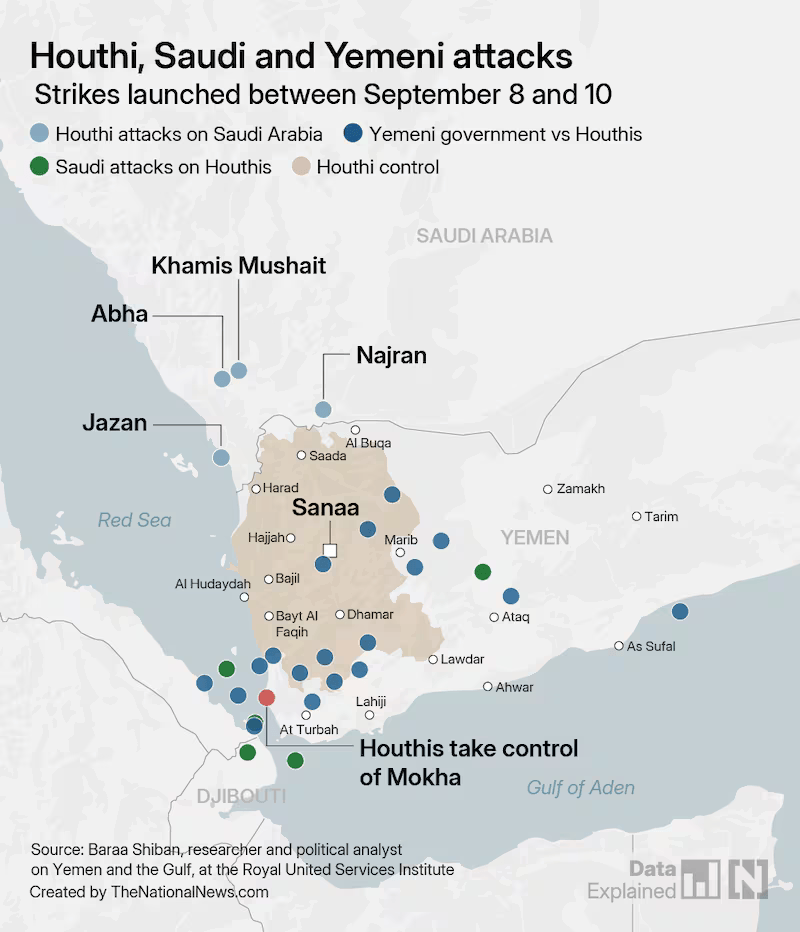
September saw not only a continuation of maritime disruption in the Strait of Hormuz but also increased pressure through Houthi territorial advances around the Red Sea. A rapid Houthi offensive resulted in the capture of key strategic locations, including the Port of Mocha and the Greater and Lesser Hanish Islands at the entrance of the Red Sea. The coordinated Houthi attacks created simultaneous chokepoint pressure, potentially providing increased leverage for the Iranian regime through restricting commercial shipping. With disruption in both Bab el-Mandeb and the Strait of Hormuz, risks to regional energy infrastructure and shipping, alongside maritime security, increased, which has also raised oil and liquefied natural gas (LNG) prices.
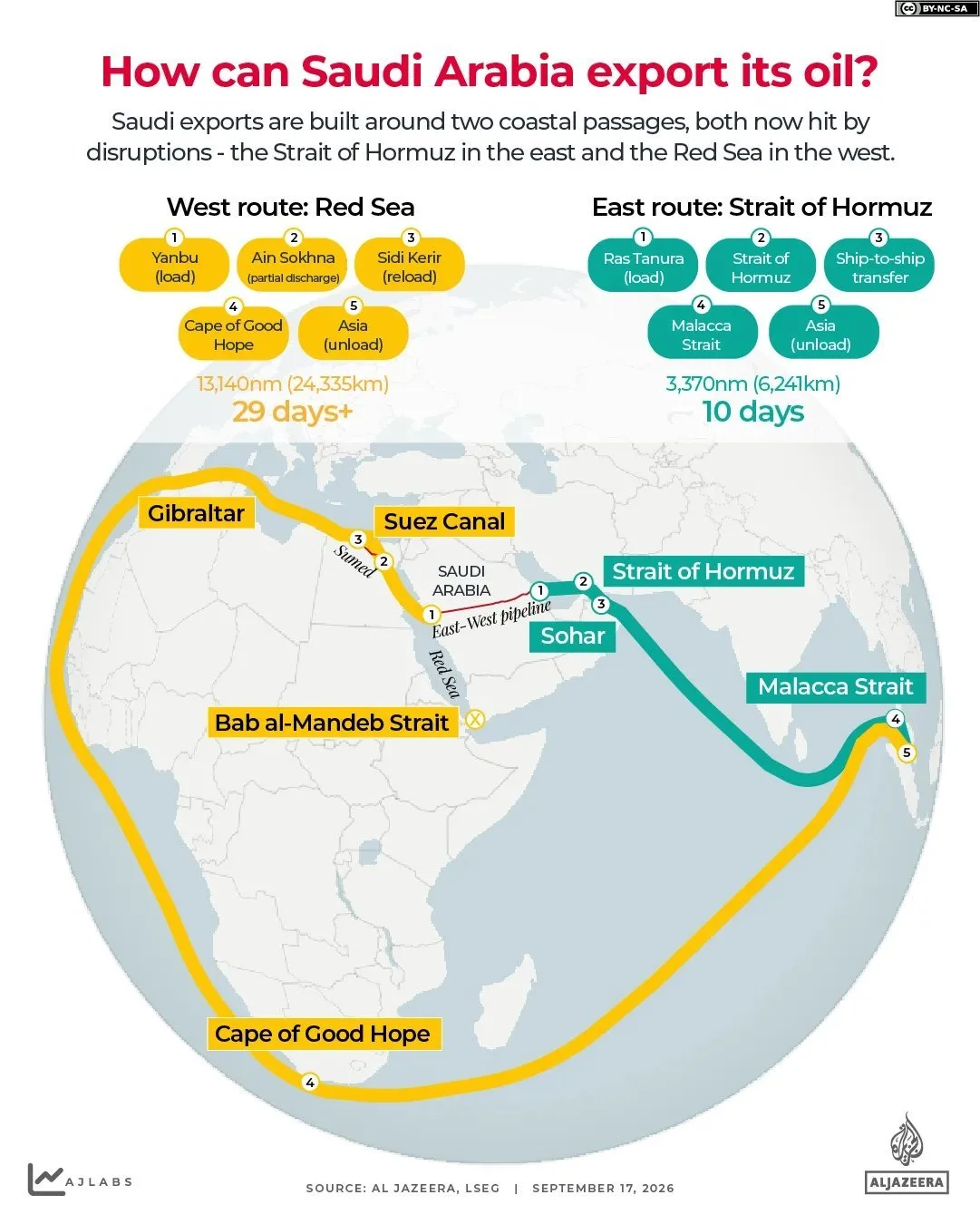
Saudi Arabia had previously responded to the disruption in Hormuz by increasing the use of overland oil infrastructure through the East-West pipeline. The Houthi advance occurred at the same time as suspected drone strikes from Iraq, which targeted the East-West pipeline, causing damage that resulted in its subsequent closure. The forced closure saw Saudi Arabia demonstrate adaptation and route resilience through offering crude oil exports via ship-to-ship transfers off Sohar port in Oman, while also loading very large crude carriers (VLCCs) from the country’s Eastern Province. Multiple disruptions forced Saudi Arabia to shift back towards reliance on Hormuz, which also required additional tankers, delays, and coordination with shipping operators, all of which affected prices and supply chain stability. Continued disruption and strikes against energy infrastructure demonstrate that while alternative routes can be developed, they are limited and can result in increased costs.
Simultaneous chokepoint disruption has increased pressure on Saudi oil exports and Qatari LNG exports, resulting in temporary supply disruptions and price increases. The Middle East Gulf–China route saw VLCC daily rates rise past USD 1.2 million, with European oil cargoes rising to over USD 130 a barrel. As the disruption escalated, Asian buyers continued to source U.S. oil, which could create additional pressure on alternative energy markets as states seek more stable routes and supply chains. Despite the attacks on Saudi infrastructure, Middle East crude exports reached 12.8 million barrels per day (bpd), the highest since the start of the conflict, aided by Saudi Arabia and the United Arab Emirates increasing exports. Oil producers have demonstrated that although supply-chain stability can be affected quickly, so too can supply-chain resilience be strengthened through alternatives. Although supply-chain resilience exists, alternative export mechanisms continue to increase costs.
Maritime insecurity has increased the risk and uncertainty for vessels transiting the Gulf chokepoints. Shipping operators are having to constantly reassess routes, costs, and insurance requirements, which is also affecting supply chains and challenging freedom of navigation. The complex operating environment has increased calls for greater protection of commercial vessels through the European Union (EU) ASPIDES mission. With six ships currently operating, the escalation in the region led to the EU’s foreign policy chief calling for more than ten naval vessels to mitigate risks. The EU response has been fragmented, with Italy immediately offering a frigate, while the country’s defence minister criticised the ability of the EU to respond efficiently. Maritime disruption in the Middle East is challenging the EU’s ability to coordinate a timely response and allocate resources as risk escalates, potentially leading member states with sufficient capacity to bypass EU-level decision-making to address regional challenges, highlighting limitations in the EU’s ability to scale the mission. European economic security is linked to supply-chain resilience; with interruptions likely to have economic repercussions for the EU, there is likely to be increased pressure from shipping operators for greater escort capacity.
Assessment Outlook
September revealed that Middle East energy exports and infrastructure endured increased pressure but also demonstrated route resilience. Saudi Arabia previously adapted export routes through the overland East-West Pipeline; however, with damage inflicted on the pipeline, the Kingdom has had to rapidly adapt by developing an alternative ship-to-ship route. The strikes against Saudi Arabia highlight that although alternative routes exist, they remain exposed and vulnerable. Developing alternative routes can also require greater resources, as ship-to-ship transfers require additional tankers and higher shipping costs, alongside rescheduled or extended voyage times.
Exports can be restored through alternative routes, but resilience also depends on wider infrastructure that requires protection. With simultaneous chokepoint disruption continuing, alongside energy infrastructure attacks, protecting maritime routes and pipelines is increasingly important for maintaining energy exports. Asian markets have increased their sourcing of U.S. oil, while Europe continues to rely on the Gulf, meaning that sustained chokepoint disruption in the Middle East may place additional pressure on Asian markets while increasing pressure on the EU to provide maritime security. The demand for naval escorts suggests that energy security, maritime security, and economic security are increasingly interconnected under sustained disruption and that while route resilience exists, further exposure to risks may have greater global repercussions.
Security Partnerships: From Agreements to Operationalisation
Security cooperation continued to expand across continents through bilateral and smaller regional groupings along with joint military exercises. U.S.–Latin American security ties deepened through the Shield of the Americas to combat narcotics trafficking, while in the Indo–Pacific, defence ministers from the region and Europe met to strengthen regional defence cooperation, Indonesia–France held Pegase 2026 air exercises, and Australia–New Zealand signed a naval agreement to strengthen maritime security. African maritime security is strengthening through joint Nigeria–Portugal cooperation in the Gulf of Guinea, while 11 Djibouti Code states proposed establishing a maritime task force to counter piracy. Amongst other cooperation developments, states are increasingly responding to security threats through regional partnerships, which may reduce dependence on external security partners.
The Houthis' attacks against Saudi Arabia have created an early test for the recently signed MECCA Joint Defence Agreement partners. A reported strike close to King Khalid International Airport signalled an escalation with the targeting of critical infrastructure. Although the Mecca Agreement contains a mutual defence clause, the response from partners was mixed, with Turkey indicating it was prepared to provide military assistance, while Pakistan remained cautious. The absence of direct military intervention may indicate that Saudi Arabia has not requested military support or that the limited attacks have not reached the threshold to trigger the agreement. Military support from the trilateral partnership may include intelligence, logistics, air defence, equipment or technical assistance, and given that the agreement was signed only six weeks ago, the ability to coordinate or demonstrate interoperability may take time. The intention of the MECCA partners may be greater interoperability; however, to shift from diplomatic intentions and formal defence commitment to operationalisation will also require investment. Although the MECCA Agreement contains a mutual defence clause, it has not yet acted as a significant deterrent at this stage of the partnership.
Saudi Arabia has diversified its security partnerships as well as maintained existing ones, yet despite this, it has not managed to demonstrate significant operational advantages during the recent attacks. Requests for U.S. support were declined, as the U.S. was maintaining a cease-fire with the Houthis; however, the Kingdom was offered intelligence and targeting support. With support offered from the U.S. and Turkey, this suggests that operational support can occur below direct military intervention during an active security threat.
Pegase 2026 joint air force exercises between Indonesia and France demonstrate a different approach to security partnership building. Indonesia has developed a broad strategy of regional security partnerships, balancing the country’s current non-alignment. Joint exercises illustrate efforts towards the operationalisation of security partnerships prior to a crisis, which may also strengthen Indonesia’s position in the region as a country that is committed to strengthening partnerships beyond diplomatic signings.
Security cooperation through regional groupings is increasing across the Indo-Pacific, East Africa, and Latin America. South Pacific defence ministers, alongside observer countries, met to discuss security matters, including expressing concerns at recent Chinese ballistic missile tests. Security arrangements such as the East African maritime task force and the Shield of the Americas in Latin America suggest that states may view regional groupings as a more rapid and dependable mechanism than relying solely on external partners. The relatively new arrangements may face immediate limitations as they develop the interoperability, political commitment, resources and coordination already present in more established security mechanisms. While the security groupings may have a framework, developing collective capacity to respond could still require time and resources.
Assessment Outlook
Regional defence cooperation continues to develop with states demonstrating a political willingness to engage in group arrangements. Although security arrangements are emerging, operational capability has not developed at the same pace, which could raise questions about how effective these arrangements remain. The MECCA Agreement may serve as an example of how partners can provide support without necessarily escalating to direct military intervention, but it also makes it difficult to interpret the extent of commitment of this type of agreement. Operating during a security threat differs from a diplomatic framework; the credibility of group arrangements may be tested if they become involved in enforcement or come under direct threat. States could be looking for overlapping security measures with bilateral arrangements already in place for some; smaller groupings could provide additional security coordination that reduces external dependence on established partners while also providing an opportunity to develop capabilities and resources. Regional partnerships will need to demonstrate commitment beyond diplomatic signalling, through joint exercises, intelligence sharing, coordination, interoperability and the ability to respond to threats.
Critical Minerals — Diversification Meets Persistent Dependence.
States continue to seek critical mineral diversification through agreements and investment to develop supply chain resilience. Critical mineral agreements are increasingly expanding beyond extraction and are incorporating processing capacity development and other economic opportunities. South Korea’s expansion into Central Asia resulted in 70 agreements and memoranda, seeking to strengthen the critical minerals sector and develop the wider value chain. The EU announced an immediate €200 million investment into Greenland that included funding for two mining projects as part of efforts to diversify supply chains, amid increasing pressure from European developers. African engagement is widening, with Zambia and India holding discussions on investment in critical minerals, particularly around India’s demand for copper. States are making efforts to reduce supply chain dependence and strategic vulnerabilities through investing and developing economic partnerships which increasingly involve critical mineral processing and capacity development.
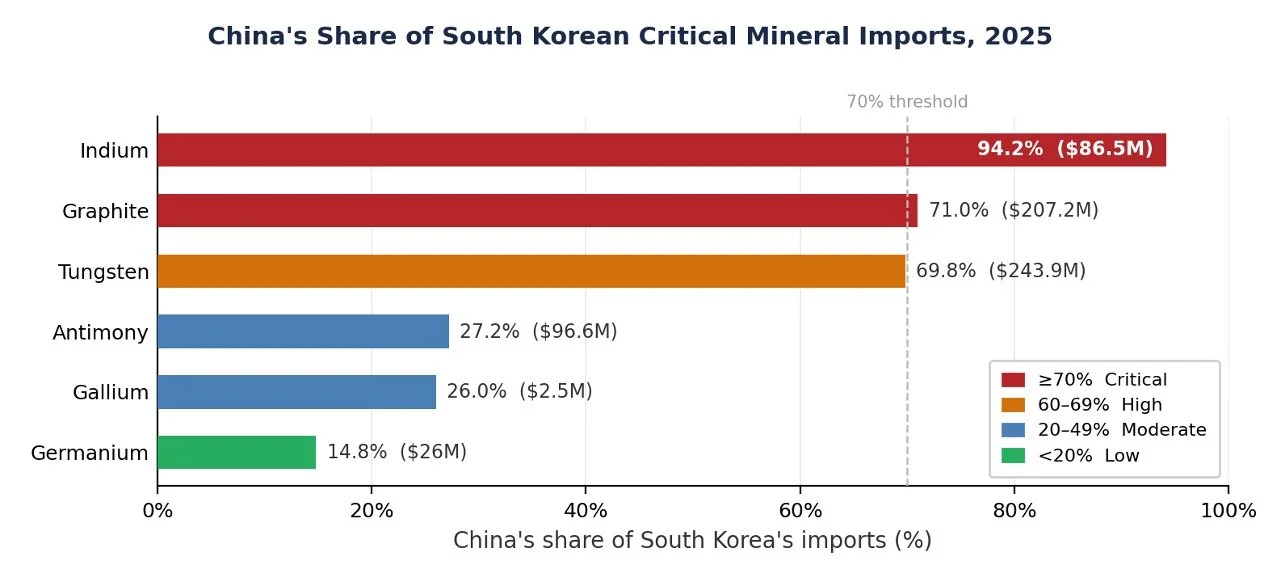
Source: The Diplomat, 2026.
Critical mineral competition saw a decline in Chinese exports to the U.S. prior to the U.S.–China discussion on the status of the Busan agreement. Although the purpose of the Busan agreement was to allow critical mineral flows, U.S. companies reported shortages of specific minerals. It remains unclear whether Chinese suppliers may have imposed self-enforced restrictions because of regulatory uncertainty or Chinese government pressure. Other countries such as Japan and India also experienced constraints despite Japan’s diplomatic engagement with China and India receiving approvals for export licences. These critical mineral supply challenges demonstrate that while states may have agreements or diplomatic relations, that does not necessarily translate to reliable supply-chain access.
Extraction is expanding beyond terrestrial mining towards deep-sea resources, with exploration likely increasing. The U.S. announced that deep-sea mining permits could be approved in months as part of the country’s diversification strategy. With China holding ISA contracts that cover all three seabed resource categories and the U.S. announcement, critical minerals competition may expand into deep-sea activity. As the U.S. is not a party to UNCLOS, it operates under its own domestic framework, which could provide opportunities for foreign investment and influence how states pursue seabed resources. Deep-sea exploration may provide the U.S. with additional resources; however, limitations remain through continued downstream dependence on Chinese processing and refining in the critical minerals supply chain.
Critical mineral diversification is shifting towards increased processing capacity and value-addition initiatives. States that hold mineral deposits are leveraging extraction opportunities to attract greater economic investment, processing and wider value chain development, which is becoming a broader African strategy but also emerging elsewhere, such as Central Asia and Greenland. Developing processing capacity could further reduce supply chain dependence, and although states continue to seek alternative sources of raw materials, without greater processing capacity, the supply chain processing bottleneck will remain. To increase processing and refining independence, states will require significant capital, infrastructure, time and technology before additional capacity becomes available, and it is therefore a longer-term project rather than one that provides immediate solutions.
Assessment Outlook
Critical mineral competition continues to expand beyond sourcing raw mineral deposits but is increasingly focused on processing, technology development and investment. Despite diversification efforts, states remain exposed to Chinese processing, which could be used as leverage through either official restrictions or suppliers reducing exports. States are developing multiple strategies simultaneously to create supply chain resilience through mining partnerships and investment in domestic processing, recycling, stockpiling and deep-sea exploration. These strategies suggest that states are aware that critical mineral supply chain resilience requires building the whole value chain rather than extraction alone.
European Security Gaps and Energy Resilience
Europe’s defence capacity continues to be tested through broader regional conflicts and existing capability gaps. With increased maritime insecurity in the Middle East, the EU’s ASPIDES mission faced additional pressure to increase naval resources to provide the necessary security escorts for commercial shipping. Alongside maritime capacity pressures, the European Defence Agency identified gaps as part of its 2030 readiness plan across air and missile defence, munitions and drones, combat and naval forces. Although funding has increased in NATO and the EU, the challenge for Europe in addressing defence gaps remains, indicating that policy and financial shifts do not progress in tandem with capability development despite overlapping interests between the two institutions.
Early in September, EU foreign policy chief Kaja Kallas proposed to form an advisory group on European defence to provide recommendations for closing capability gaps. This led to some opposition from member states, including Germany, France, and Italy. Part of the disagreement was due to the potentially overlapping functions between the EU and NATO, as the EU has the European Defence Agency to identify gaps as part of its readiness 2030 plan. NATO sets planning and capability targets through NATO’s Defence Planning Process (NDPP), which provides a framework for capability building. While overlaps exist, NATO generally identifies defence requirements, planning priorities and capability targets, while the EU focuses more on financing, joint procurement and defence industrial support. The opposition to the proposed advisory group may suggest that certain members view the current mechanisms as sufficient to identify capability gaps, with greater emphasis on developing capacity.
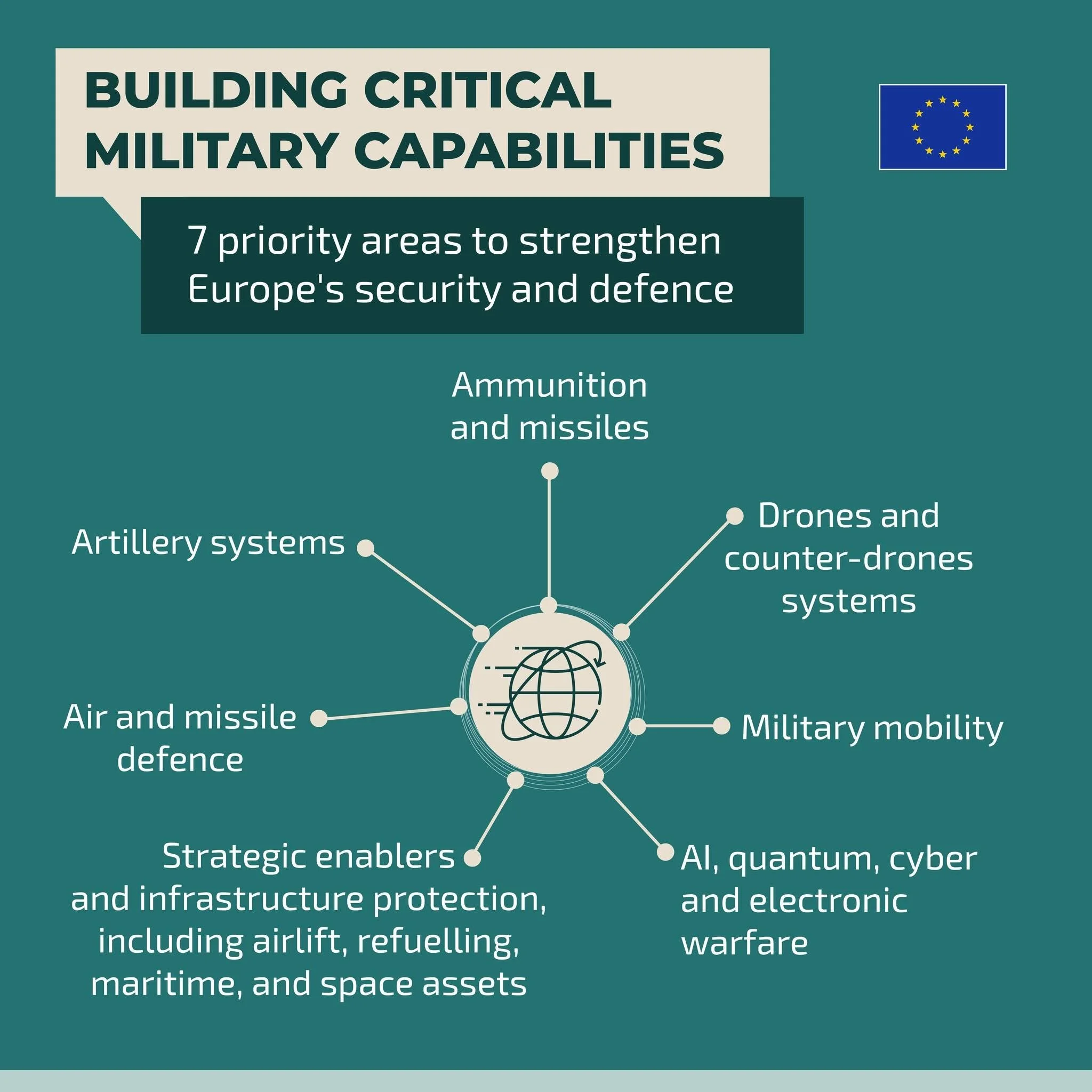
Source: European External Action Service (EEAS), 2025
The EU and NATO have overlapping functions; however, the size and demands of such organisations may not be sufficient to reassure member states that defence needs are efficiently met. Poland has increased its defence budget significantly, with the country developing domestic and Central European production, alongside reducing dependence on external suppliers. Despite extensive NATO and EU-level planning and financing, Poland's investment and defence industrial development suggest that states may continue to value national-level decision-making and capability development to close institutionally identified gaps, as well as gaps identified nationally. Similar to Italy’s rapid response for naval support for the EU’s ASPIDES mission, Poland could view national-level capability development as more efficient to meet gaps and reinforce wider European defence capacity.
Maritime disruption in the Middle East has created pressure on European energy security, with gas storage at its lowest level for this point of the year in 15 years. Qatar’s liquefied natural gas exports have declined after a series of attacks, which has compounded pressure on European gas supplies alongside increased global demand, potentially placing further pressure on prices. The EU response has been to ask capitals to consider reducing gas and electricity demand, while Germany is aiming to incentivise gas storage, which potentially indicates that reducing demand is seen as a more immediate option than increasing supply. Although Europe has made efforts to diversify from dependence on Russian energy and invested in renewables, this highlights that diversification can mitigate disruption from one source, while simultaneous disruption across multiple sources can further expose the continent to external shocks and price increases.
Assessment Outlook
September revealed that Europe has mechanisms to build resilience in defence and energy through investment and planning. European diversification and resilience development exist, but a convergence of multiple pressures has exposed gaps in European resilience and capacity. As pressure has increased, individual member states have responded at a national level with Italy’s naval commitment, Poland through defence-capacity development, and Germany through its gas policy. If maritime pressure continues alongside an escalation of hybrid security threats, Europe may face increasing pressure over where to allocate limited defence and gas resources and respond efficiently, while member states may choose to make decisions independently to address national gaps.
Emerging Risks
Simultaneous chokepoint pressure and attacks against energy infrastructure could have global repercussions. Saudi Arabia has demonstrated energy route resilience, but those alternatives remain exposed to risks. Ongoing disruption could increase shipping costs, energy prices and supply-chain instability, particularly for Asian and European markets.
Security partnerships are emerging, being tested and deepening through joint exercises. Attacks against Saudi Arabia have illustrated that mutual defence clauses may not be a deterrent and a gap may exist between formal commitments and how security partners respond to threats. Regional groupings will require resources and coordination and may face credibility challenges if they are unable to respond effectively to threats.
States are signing mining agreements and investing in processing capacity, but this may create the impression of greater supply-chain diversification before downstream capabilities are able to reduce foreign dependence.
Simultaneous pressure on European security and energy could expose vulnerabilities and limits of European capacity. Prolonged disruption could increase national-level responses from member states, which may reinforce existing institutional mechanisms or potentially cause some friction.
Strategic Indicators
Middle East Maritime Disruption
Increasing ▲
Middle East Energy-Route Resilience
Mixed ↔
Regional Security Cooperation
Increasing ▲
Critical Minerals Diversification
Increasing ▲
Chinese Critical Mineral Supply Chain Leverage
Stable ►
European Defence Capacity Pressure
Increasing ▲
European Energy Security Pressure
Increasing ▲
What to Watch
Middle East: Commercial shipping transit data alongside Saudi export volumes and energy routes being used. Escalation in attacks against energy infrastructure or vessels transiting Hormuz and Bab el-Mandeb. Any changes in Qatari LNG production or exports.
Security Partnerships and Operationalisation: Response from MECCA partners to any escalation against Saudi Arabia, including intelligence, air defence, logistics or cooperation. Further progress of the East Africa maritime task force. Continued cooperation and joint activity with the Shield of the Americas.
Critical Minerals and Processing Capacity: Efforts towards implementation of mining, processing and investment agreements. Any changes in Chinese critical mineral exports, including formal restrictions or suppliers reducing exports. Progress on U.S. deep-sea mining permits and further investment in developing domestic processing and refining capacity.
European Security and Energy Capacity: EU announcements on strengthening the ASPIDES mission or further member state naval contributions. EU measures to address defence capability gaps identified by the EDA, alongside individual national-level responses. Gas storage volumes and LNG availability, as well as energy demand-reduction measures.
Sources
Middle East — Maritime Disruption, Energy Security and Adaptation
Reuters — Saudi Arabia ramps up Gulf oil exports after pipeline attack — Saudi export adaptation following disruption to the East–West Pipeline.
Reuters — Gulf of Oman ship-to-ship transfers reach capacity as Saudi exports surge — Sohar STS transfers, tanker requirements and freight-rate pressures.
Reuters — Middle East oil exports rebound as Saudi Arabia boosts shipments — September export recovery and Saudi/UAE export volumes.
Reuters — Saudi Arabia resumes Yanbu oil loading after pipeline restart — East–West Pipeline restart and return of Yanbu loadings.
Reuters — QatarEnergy seeks U.S. LNG deals through 2031 — Qatari LNG capacity disruption and alternative supply.
Reuters — EU's Kallas says Red Sea mission needs more than 10 warships — ASPIDES capacity, six deployed vessels and requirement for additional naval resources.
Reuters — Iran insists on diplomatic solution after Trump rejects peace plan — Strait of Hormuz disruption and negotiations over reopening the waterway. Reuters
Security Partnerships — From Agreements to Operationalisation
Reuters — Pakistani, Saudi and Turkish chiefs discuss closer military ties — MECCA Joint Defence Agreement, intelligence sharing, coordination and capability integration. Reuters
Reuters — Turkey, Saudi Arabia, Pakistan and Egypt affirm Riyadh's right to defend itself — partner response to Houthi escalation and regional navigation security. Reuters
Reuters — Saudi foreign minister arrives in Washington for talks with Rubio — U.S. decision not to conduct renewed strikes and provision of intelligence/targeting support. Reuters
Reuters — Peru to join U.S. anti-drug coalition Shield of the Americas — development of the Shield of the Americas.
Australian Department of Defence — South Pacific Defence Ministers' Meeting 2026 — South Pacific defence cooperation.
Australian Department of Defence — South Pacific Defence Ministers' Meeting Joint Communiqué — interoperability, exercises and regional security concerns.
Australian Department of Defence — Australia and New Zealand strengthen naval partnership — Australia–New Zealand naval interoperability.
French Ministry of Armed Forces — Mission Pégase 26 — French Indo-Pacific deployment and exercise activity.
Portuguese Armed Forces — Portugal and Nigeria joint maritime exercise — maritime surveillance, joint procedures and Gulf of Guinea capacity development. Emgfa
Camões Institute — Nigeria SWAIMS operational exercise — interoperability and operational maritime-security capacity in West Africa. Instituto Camões
Critical Minerals — Diversification Meets Persistent Dependence
Reuters — China's rare-earth dominance to overshadow Trump talks with Xi — continuing Chinese processing/refining dominance, U.S. dependence and supplier withholding of shipments. Reuters
Reuters — U.S. and Japanese officials discuss China's yttrium restrictions — export restrictions, licensing problems and U.S.–Japanese supply-chain diversification. Reuters
Reuters — South Korea puts critical minerals and energy at forefront of Central Asia summit — more than 70 agreements and MOUs and expansion across the mineral value chain. Reuters
European Commission — EU and Greenland strengthen partnership with €200 million investment — critical raw materials and wider EU–Greenland investment. Stratégie numérique
European Commission — EU–Greenland Partnership factsheet — €200 million Global Gateway package covering critical raw materials, energy and connectivity. International Partnerships
Reuters — India revives talks with Zambia to invest in critical minerals — Indian investment interest in Zambian critical minerals.
Reuters — U.S. aims to issue deep-sea mining permits within months — U.S. seabed-mining strategy and permitting timetable. Reuters
NOAA — Deep Seabed Hard Minerals Mining — DSHMRA framework, U.S. permitting, applications and relationship with the ISA/UNCLOS framework. Service Océanique National
Argentina Foreign Ministry — Argentina and U.S. launch Andes–Atlantic Corridor — U.S.–Argentina infrastructure and supply-chain cooperation.
Europe — Security Gaps and Energy Resilience
European Defence Agency — Annual Defence Readiness Report — European defence-capability gaps and investment requirements.
European Commission — Defence Readiness Roadmap 2030 — capability priorities, procurement and industrial-development framework.
Euronews — EU diplomatic service scraps Kallas defence advisory group — proposed advisory group and member-state opposition. euronews
Defense News — EU shelves Kallas defence panel after member-state pushback — opposition involving Germany, France and Italy and the proposed group's capability-gap remit. Defense News
Reuters — Poland pivots to domestic defence production — Polish defence spending, domestic/Central European production and reduced reliance on external suppliers. Reuters
Reuters — EU warns of energy price crisis and asks countries to consider curbing demand — European gas storage, energy prices and demand-reduction measures.
Reuters — German gas supply secure despite low storage levels — German storage levels, diversified import sources and winter supply resilience. Reuters
Reuters — Qatar extends force majeure notices on LNG supply — effects of Qatari LNG disruption on European supply.
Reuters — EU's Kallas says Red Sea mission needs more than 10 warships — ASPIDES resource requirements and European naval capacity.
Reuters — Middle East oil exports rebound as Saudi Arabia boosts shipments — energy-market adaptation and export recovery.