Buffer Zone Under Pressure: UNIFIL Exposed in Southern Lebanon
Key Takeaways
Conflict in southern Lebanon has led to UNIFIL casualties, exposing increasing risk in the region.
Escalation in southern Lebanon is reducing the effectiveness of the UNSCR 1701 buffer zone.
A weakened buffer may increase operational mobility for actors but also raise the risks of escalation.
The recent deaths of UN forces along the Israel-Lebanon border indicate the increasing exposure of neutral forces to conflict. Three UN soldiers were killed in recent weeks, with others injured. This includes the killing of a UN soldier of French origin in active exchanges drawing condemnation and being attributed to Hezbollah by President Macron. With the zone becoming more contested, the escalation suggests that UN forces are operating inside an active conflict environment. Their role is to maintain a buffer zone between Hezbollah and Israel under UNSCR 1701. Although the mission is designed for de-escalation, the deaths reflect the erosion of security conditions in the buffer zone and raise questions about the viability of the buffer system.
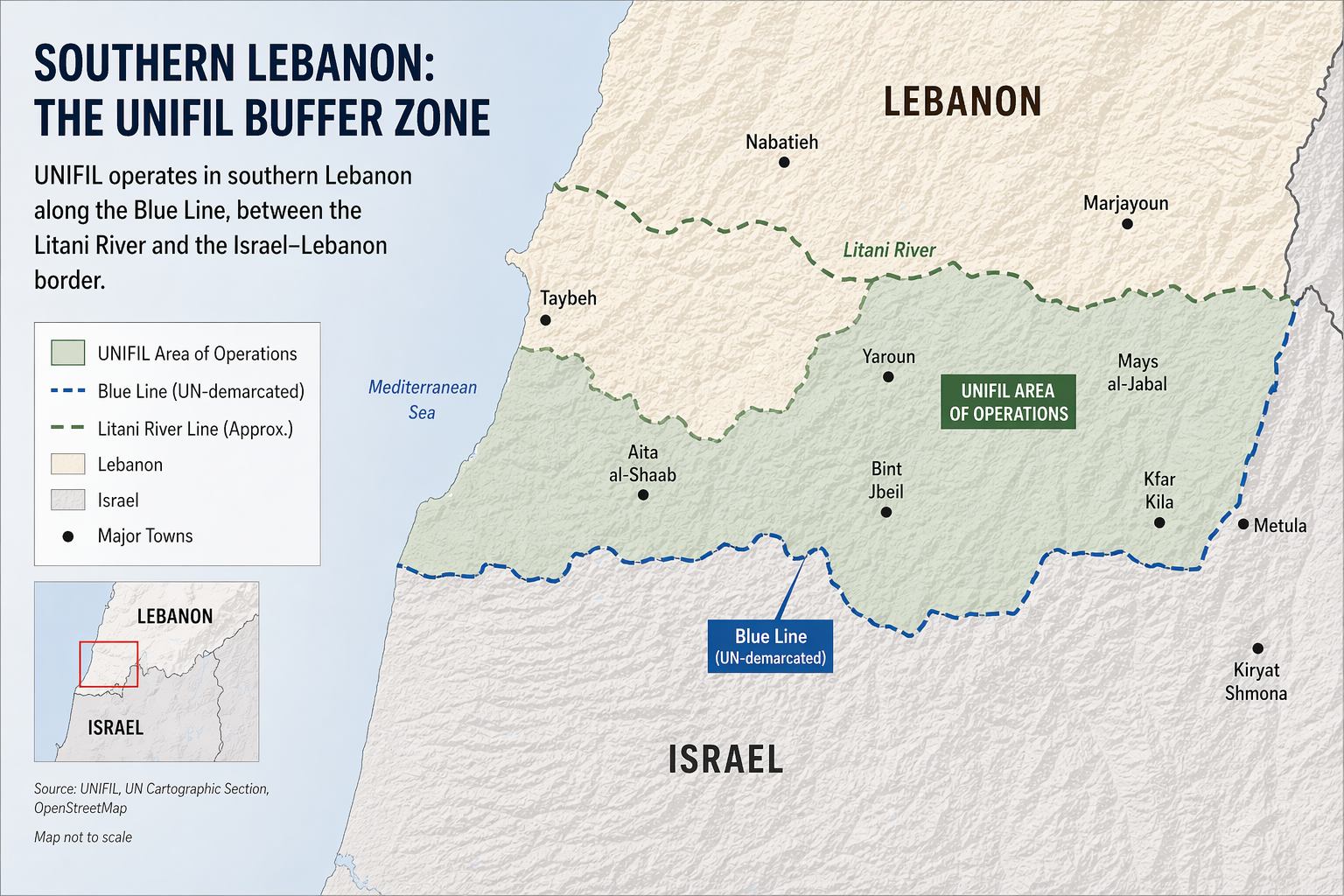
Source: GeoPolLens (illustrative map, not to scale)
The United Nations Interim Force in Lebanon (UNIFIL) patrols the Israel-Lebanon border, which was expanded in 2006. With roughly 7,500 troops, part of UNIFIL's mandate includes assisting the Lebanese Armed Forces and monitoring the ceasefire and reporting violations of UNSCR 1701. As a post-conflict stabilisation force, its role as a neutral presence is not to engage in a combat environment. To be effective, it requires restraint between Israel and Hezbollah. The escalation along the Israel-Lebanon border highlights the gap in mission design and operational reality.
The current escalation is eroding the conditions that sustain the buffer zone. UNIFIL is now increasingly exposed to unpredictable combat conditions, such as indirect fire. With less restraint from actors, the buffer zone has become an engagement space offering less insulation from risk. Regardless of intent or responsibility for indirect fire, the issue is the weakening of the buffer zone and the reduced effectiveness of the neutral presence.
Deaths of UNIFIL personnel risk further eroding the buffer and altering dynamics along the border. As the mandate is non-combat, the deaths increase pressure on UNIFIL to reassess its presence due to the unpredictability and risk. Indirect fire suggests that engagement is occurring with less consideration for the buffer. The incident also suggests the situation may become more volatile, and neutral forces are becoming less of a deterrent. According to Israeli security officials, thousands of Hezbollah rockets have been launched from south of the Litani since early March. Similarly, Hezbollah has also claimed it has conducted roughly 50 attacks a day over the last six weeks. While the buffer zone remains, it is becoming less effective in influencing conflict.
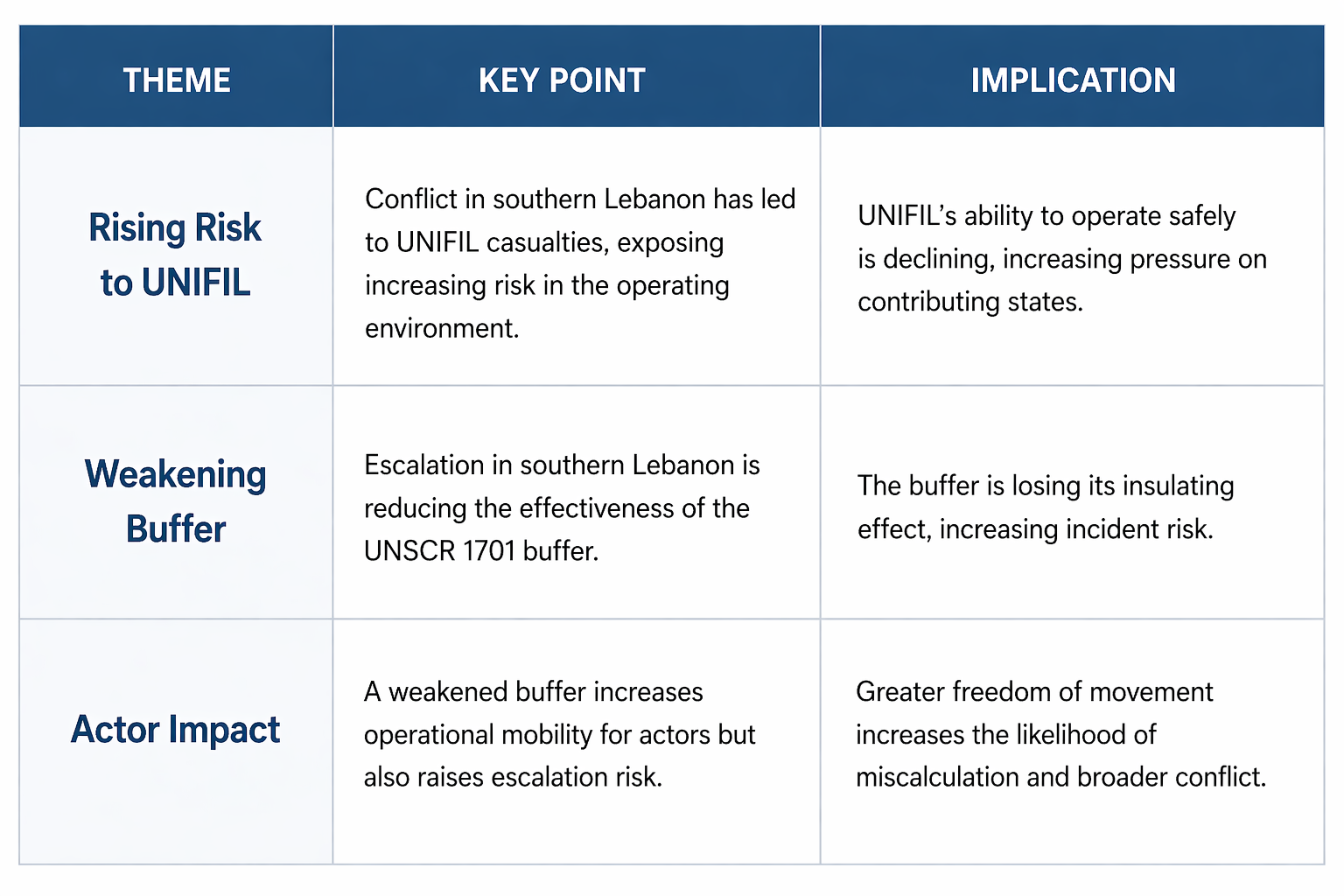
If these conditions persist or deteriorate, the UNIFIL mission will be under increasing pressure, placing its role under growing question. Contributing states may reevaluate their participation in the buffer zone, which could lead to some withdrawal. A reduced UNIFIL presence risks weakening the effectiveness of the buffer while placing patrols at risk. Less visibility could also weaken the buffer zone and allow actors to more freely operate within the area. In such a scenario, the risk of miscalculation or incidents becomes more likely and harder to contain. While the buffer remains, its ability to maintain control and reduce escalation remains under pressure.
A weakened buffer zone has implications for actors on the border. For both Hezbollah and the Israel Defense Force (IDF), a reduced buffer increases operational freedom but also raises the risk of conflict. Hezbollah's increasingly decentralised structure may increase the risk of escalation through miscalculations. For the Lebanese Armed Forces (LAF), its capacity to enforce control in the region is limited and partly reliant on the buffer as a constraint. A diminished buffer is likely to place greater pressure on an already constrained LAF. Operational mobility may increase with a deteriorating buffer, but so too does the risk of escalation.