Strategic Window: Hezbollah, Israel, and Domestic Pressure
Key Takeaways
Strikes on Iran have created a strategic window for Israel along the Lebanese border.
Hezbollah’s loss of leadership and infrastructure has weakened its deterrence.
Israel may be seeking to enforce a buffer zone under UNSCR 1701.
Internal political pressure suggests a shift in tolerance toward Hezbollah.
The situation presents a strategic dilemma, where military deterrence could trigger regional and internal escalation.
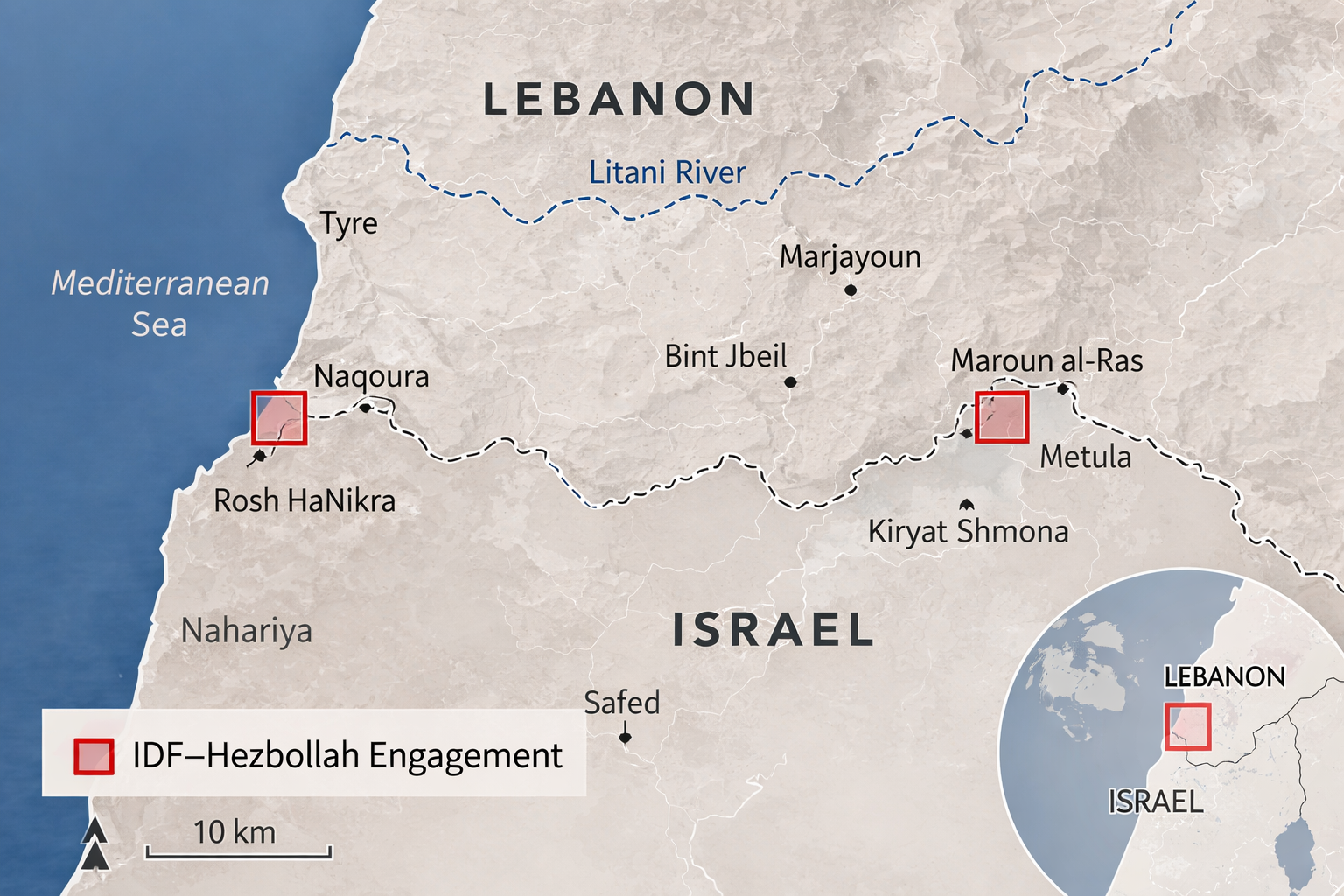
The U.S. and Israeli strikes on Iran may have presented Israel with an opportunity to further diminish Hezbollah’s military capacity along the Israel-Lebanon border. Israel has launched strikes in southern Lebanon and warned residents to evacuate. The warning was issued to those residents south of the Litani River. The United Nations Security Council Resolution 1701, adopted after the 2006 Israel–Hezbollah war, was supposed to provide a buffer zone between the two countries. The border framework required Israel to withdraw from southern Lebanon and Hezbollah to stay north of the river. Despite the resolution, Hezbollah has maintained a presence south of the Litani River and has engaged in armed clashes in the intended buffer zone. A combination of Lebanese state pressure and a militarily weakened Hezbollah could result in Israel seizing the strategic window to enforce a buffer zone.
For years, Hezbollah has been one of Israel’s most serious threats, but its leadership may have underestimated Israel’s intelligence capabilities. The Israeli-coordinated detonation of Hezbollah’s pagers and walkie-talkies across Lebanon and Syria seriously degraded Hezbollah’s leadership network. This attack was followed by extensive Israeli airstrikes that led to the death of Hezbollah’s secretary-general, the cleric Hassan Nasrallah. Within two weeks, one of Iran’s most powerful proxies, Hezbollah, emerged substantially weakened, diminishing its capacity to threaten Israel. Israel’s penetration of Hezbollah’s communication devices allowed it to target senior leadership, signalling to Hezbollah and Iran that Israel had operational reach. The impact reportedly resulted in Iran suspending communications systems. Hezbollah’s loss of experienced militants, command facilities, and weapons altered the balance of power in the region while increasing pressure on Iran.
It is not only Israel that may view an opportunity to ensure stability in southern Lebanon. The reaction from the Lebanese state suggests that its stance on the militant group is shifting. Lebanon is facing economic hardship with half of the population living in poverty, which has increased political pressure. The combination of economic problems, currency devaluation, and instability would be exacerbated by conflict in the south. A large-scale war could have devastating impacts on the already fragile economy and infrastructure. Historically, the Lebanese state has had limited capacity to restrain or intervene in Hezbollah-dominated areas. However, Prime Minister Nawaf Salam has ordered Hezbollah to both cease military activities and disarm as a matter of national security. The political response suggests there could be a change in policy towards the weakened militant group. Lebanese President Joseph Aoun called French President Emmanuel Macron to request support to halt Israeli airstrikes and the potential escalation on the Israeli–Lebanon border. The call could also highlight the fragile state of Lebanon and its inability to support fleeing residents. Hezbollah is now facing increasing internal pressure from the Lebanese government and from Israel along the border.
The purpose of the United Nations Security Council Resolution 1701 was to prevent this current situation with a stabilised buffer zone supported by the Lebanese Armed Forces and the UN Interim Force in Lebanon. Hezbollah forces were expected to remain north of the Litani River; however, Hezbollah has maintained fighters and infrastructure south of the Litani River. Military installations in the south allow Hezbollah to project reach using anti-tank guided missiles, missile fire that can fly below the Iron Dome, and sniper fire on individuals and vehicles. The closer proximity not only provides Hezbollah a direct line of sight of Israeli movements but also means Israeli residents have less warning time of Katyusha rockets. It is strategically important for Hezbollah to maintain a presence south of the Litani River, as it poses an increased threat to Israel.
Hezbollah’s presence south of the Litani River poses one of the most serious threats to Israel’s security. It allows Hezbollah using its missile arsenal to strike deep inside Israel and launch cross-border raids. Despite Israeli officials raising concerns about the violation of the post-2006 war framework, Hezbollah forces have continued to operate along the border. Recent clashes in eastern Lebanon between Hezbollah and Israel near the Syrian border suggest that Israel is possibly aiming to secure certain security objectives, including the buffer zone envisaged by the United Nations Security Council Resolution 1701. Additionally, the eastern border is used as an Iranian weapons pipeline to transfer arms to Hezbollah. With both Iran and Hezbollah impacted by recent conflicts and airstrikes, Israel may be aiming to create a buffer, further weaken Hezbollah, and establish the buffer zone along the Litani River.
Hezbollah’s dilemma is that its withdrawal from south of the Litani River would result in a loss of deterrence with Israel. Given recent statements by the Lebanese government and the loss of Hezbollah’s leadership, there is likely to be some indecision within Hezbollah. At the same time, Israel may recognise that after the military strikes against Hezbollah, this could be the weakest the militant group has been in recent years. Hezbollah remains embedded in Lebanese society, and given its organisational sophistication, it is likely transitioning potential leaders. It is a fragile time for the Israel–Lebanon border. Israel may believe that with Iran under pressure, this could be the best strategic opportunity to strike Hezbollah and significantly incapacitate the group. This could enable Israel to create the envisaged 2006 buffer zone.
The high-risk window presents Israel with an opportunity, but one that could escalate and result in a dangerous miscalculation. Both Hezbollah and Israel understand the importance of their strategic objectives. A Hezbollah withdrawal would result in a loss of deterrence and create a strong incentive for Hezbollah to hold its position, while Israel’s objective of removing Hezbollah’s presence from the border would reduce the threat to Israel. There are strong incentives for both sides to make efforts to achieve their objectives despite the risks. An escalation would likely have wider implications for the region, including Lebanon, which is why Lebanese politicians have made efforts to deescalate the conflict. The current window poses a strategic dilemma: a weakened Hezbollah and regional pressures are colliding, potentially resulting in either continued deterrence or escalation.